Nail Fungus Treatment
Fast-Acting OTC Solution

Nail Fungus Treatment | Fast-Acting OTC Solutions

Stubborn toenail fungus? Go beyond surface-level treatment with Imperial Feet’s Nail Mycosis Solution. Formulated with Tea Tree Oil, Jojoba Oil, and Piroctone Olamine to target fungus within the nail. Simple, effective home care for healthier-looking nails. Shop the Imperial Feet Nail Fungus Treatment Collection today.

Shop the complete treatment set
Imperial Feet Shoe & Sock Spray and Nail Mycosis Solution – powerful treatment for fungal nail and athlete’s foot, with tea tree and jojoba oil, made in the Netherlands.
Fungal Nail Treatment Set
5.0
Regular price €35,97
Anti-Fungal Shoe & Sock Disinfectant Spray
nail and sole foot soak
Anti-Fungal Foot Soak XL
5.0
Regular price €19,62
nail mycosis and athlete's feet solution
Imperial Feet Foot Care Set featuring Foot Soak with Tea Tree Oil, Foot Balm Soft, Foot Balm Blue, and Foot Balm Green – a complete routine for soft, healthy feet

You've viewed 7 of 7 results

Symptoms of Early-Stage Toenail Fungus

Nail fungus is easy to miss in its early stages. Most people dismiss the first signs as nail damage, staining, or just aging and by the time it is obvious, the infection is already established.
Watch for these signs:

Toenail discolouration

Discolouration

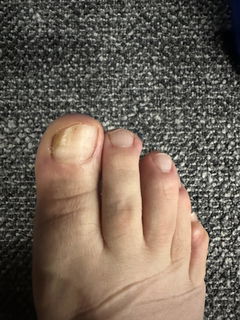
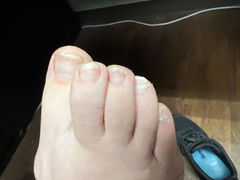
White spots, yellow patches, or brown staining starting at the nail tip or sides

Thickening icon

Thickening

The nail becomes harder to trim and starts to feel dense or brittle

Distorted nail icon

Distorted shape

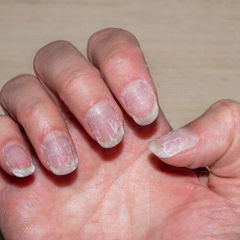
The nail curves, ridges appear, or the texture becomes chalky and rough

Nail separation icon

Separation

The nail lifts slightly from the nail bed, with a visible gap underneath

Odour icon

Odour

A faint, unpleasant smell from the nail area, often from secondary bacterial activity

Severity Breakdown

Mild stage: Discolouration only, no thickening. The most treatable stage starts immediately.

Moderate stage: Thickening with discolouration affecting 25–50% of the nail.

Severe stage: 50%+ of nail affected, possible separation, significant thickening. Early treatment matters. The earlier you start a fungal nail treatment, the shorter the recovery.

What Causes Nail Fungus?

Knowing how it starts makes prevention as important as treatment. Nail fungus (Onychomycosis) is caused by dermatophyte fungi that thrive in exactly the conditions most people's feet spend their day in.

Nail anatomy diagram

Warm, damp environments

Gyms, swimming pools, communal showers, and locker rooms are the classic sources. Fungal spores live on these surfaces and enter through tiny skin breaks around or under the nail.

Tight, non-breathable footwear

Shoes that trap heat and moisture create the ideal environment for fungal growth on the feet and nails every single day.

Sweaty socks worn too long

Moist fabric in contact with the skin accelerates the conditions that allow fungal colonisation.

Minor nail trauma

A knocked, bruised, or repeatedly pressured nail creates a micro-gap between the nail plate and nail bed. The exact entry point fungi use.

Reduced immunity or circulation

Diabetics are two to three times more likely to develop nail fungus because of impaired circulation and a reduced immune response at the extremities. Age is also a factor as circulation decreases naturally over time.

Shared nail tools or shoes

Clippers, files, and footwear transfer fungal spores directly from one person to another.

Is Nail Fungus Contagious?

Yes. Nail fungus spreads through direct contact with infected surfaces, shared nail tools, contaminated floors, and footwear. It can spread from nail to nail on the same foot, to adjacent toes, to skin (causing athlete's foot), and to other people in a household. Wearing flip-flops in shared showers, never sharing clippers or files, and sanitising shoes throughout treatment are all genuinely important; not overcautious.

Prevention is Not Optional

Using the Anti-Fungal Shoe Spray daily is critical to prevent reinfection from your footwear during treatment.

Best Toenail Fungus Treatment: How to Choose by Stage

Your Stage What You're Seeing Best Starting Point
Mild White spot or yellow edge; nail not yet thickening Nail Mycosis Starter Kit - Solution + shoe spray to close both doors
Moderate 25–50% discoloured, beginning to thicken Fungal Nail Treatment Set XL - extended course with shoe spray
Severe 50%+ affected, thick, crumbling, or lifting Complete Nail Mycosis Care Kit - full system including skin balm for periungual protection
Nail + Skin Toenail fungus alongside athlete's foot Nail & Foot Fungus Care Kit - treats both simultaneously
During treatment Active treatment but want to cover nails Nail Mycosis Set XL - solution + shoe spray + breathable nail polish

Best Nail Fungus Treatment at Home | What the Ingredients Actually Do

The best over-the-counter toenail fungus treatment is not just the one with the strongest antifungal active. It is the one that can deliver that activity to where the fungus actually lives.

Nail fungus treatment ingredients

Tea Tree Oil (Melaleuca Alternifolia)

Terpinen-4-ol, the primary antifungal compound in tea tree oil, disrupts fungal cell membranes. It has demonstrated activity against Trichophyton rubrum (the pathogen responsible for the vast majority of nail fungus cases) in multiple in vitro studies. This is the active that does the heavy lifting in the Nail Mycosis Solution. A 2011 clinical study found positive improvement in 15 of 18 patients using a camphor and tea tree oil formula for onychomycosis over 48 weeks.

Jojoba Oil (Simmondsia Chinensis Seed Oil)

A liquid wax ester structurally similar to the skin's own sebum. Its small molecular size allows it to carry other activities through the nail plate which significantly improves the penetration of tea tree oil into the nail bed. This is why the combination outperforms pure tea tree oil alone.

Piroctone Olamine

A broad-spectrum antifungal and antibacterial active with a separate mechanism from tea tree oil. It inhibits the enzymes fungal cells need for growth. The two mechanisms together make resistance significantly harder for the fungus to develop.

Glycerin

Hydrates and conditions the nail plate and cuticle during treatment. It prevents the brittleness and dryness that can worsen with prolonged antifungal use.

Chestnut Seed Extract (Aesculus Hippocastanum)

Supports nail bed circulation and tissue integrity. It helps the nail plate maintain structure while the infection is being cleared.

Over-the-Counter Toenail Fungus Treatment vs Prescription: What You Need to Know

01

OTC Topical Treatments

Effective for mild to moderate infections when the formula can penetrate the nail. Nail Mycosis Solution is FDA-registered and suitable for daily home use without a prescription.

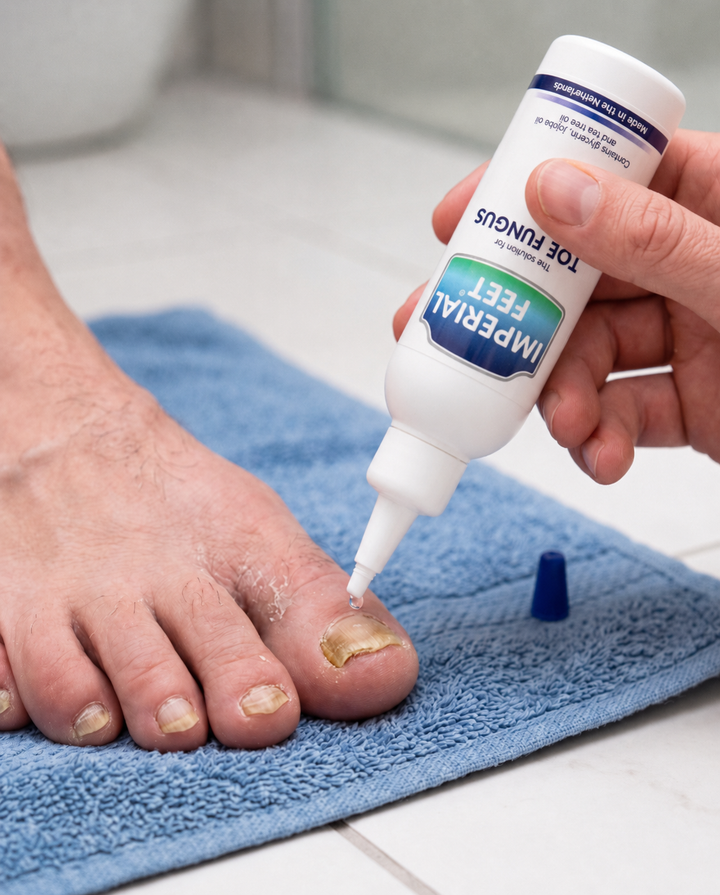
Applying topical toenail fungus treatment solution
02

Oral Prescription Antifungals

Terbinafine offers higher systemic efficacy with around 70–80% mycological cure rates in clinical trials. Requires prescription, liver monitoring, and is usually considered for severe infections.

Prescription oral antifungal medication for toenail fungus
03

When Prescription Is Needed

Recommended for severe cases with more than 50% nail involvement or when topical treatment shows no improvement after 3–6 months.

Severe toenail fungus requiring medical treatment
04

Laser Treatment

Laser therapy may improve persistent cases, with reported improvement rates of 63–83% across 3–4 sessions. Costs vary by location and treatment provider.

Laser treatment for toenail fungus

Specialized Advice

Yellow Toenail Fungus Treatment | What the Colour Tells You

Yellow toenails are one of the most searched nail fungus symptoms, but not every yellow nail is fungal. True fungal yellowing usually begins at the nail tip or sides, spreads inward, and is accompanied by thickening or opacity. If discoloration is spreading or other nails are becoming affected, treat it as fungal early.

Polish staining usually sits on the surface and fades after polish removal, while age-related yellowing tends to affect nails evenly. See the full guide on how to get rid of yellow toenails.

Best Treatment for Thick Fungal Toenails | Filing Is Not Optional

Thick fungal nails create a barrier that prevents treatments from reaching the infection effectively. Filing the top surface before applying treatment helps reduce nail thickness and improves penetration.

Use a glass file or e-file on the nail surface only. Do not file aggressively or continue until pain or bleeding occurs. The goal is simply to thin the nail plate so active ingredients can travel deeper.

Anti-Fungal Shoe Spray | The Step Everyone Skips

Treating the nail alone is not enough if your shoes still contain fungal spores. Wearing untreated footwear can repeatedly expose your feet to the same infection source.

Anti-Fungal Shoe & Sock Spray helps eliminate fungal spores and bacteria while controlling odour. Use it inside worn shoes daily during treatment and continue for several weeks after nails appear clear.

Best Antifungal Foot Soak for Nail Fungus | Preparation Matters

Soaking before treatment is more than a comfort step. Warm water softens the nail plate and temporarily increases permeability, allowing Nail Mycosis Solution to penetrate deeper than it would on dry, untreated nails.

The Anti-Fungal Foot Soak XL with tea tree oil and Epsom salt adds antifungal and antibacterial support while preparing the nail for treatment. Use it for 15–20 minutes, 2–3 times per week as part of your complete routine.

How to Use Foot Soak Before Nail Treatment

For best results, soak feet before applying your treatment solution. After soaking, dry your feet completely and apply Nail Mycosis Solution while the nail surface is softened and prepared for better absorption.

Combining preparation, treatment application, and footwear hygiene creates a complete approach that targets both the nail and the environment where reinfection can occur.

Get Your Results | What to Expect

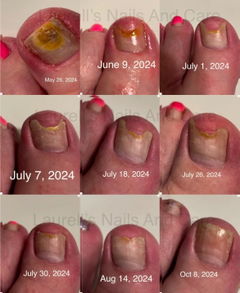
Nail fungus requires patience. Healthy nails take time to grow out. Here is a realistic timeline for clearing the infection with consistent twice-daily treatment.

Healthy feet after toenail fungus treatment

Weeks 1-2

Formula penetrates nail beds daily. Fungal activity begins to decrease. No visible change yet.

Weeks 2-4

Reduced discolouration and thickening visible at the nail base. Healthy nails are beginning to grow.

Months 2-3

Clear, healthy nail growing from the cuticle upward. Continue treatment daily without gaps.

Months 3-6

Infected nail growing toward the tip. Most mild-moderate cases significantly improved.

Months 6-12+

Full healthy nail regrowth. Toenails grow 1–1.5mm per month. This is biology, not failure.

When to See a Podiatrist or Doctor

Over-the-counter nail fungus treatment works for the majority of mild to moderate cases. See a GP, dermatologist, or podiatrist if:

  • You have diabetes, poor circulation, or peripheral neuropathy. Any nail change needs professional evaluation
  • The infection covers more than 50% of the nail and appears to be progressing
  • You have used a quality topical treatment consistently (twice daily, filing, shoe spray) for 3–6 months with no visible improvement
  • You notice redness, warmth, swelling, or discharge around the nail. These are the signs of secondary bacterial infection

Frequently Asked Question

What is the difference between the Starter Kit and the Complete Nail Mycosis Care Kit?

The Starter Kit includes the Nail Mycosis Solution and Shoe & Sock Spray ideal for mild to moderate infections. The Complete Care Kit adds Footbalm Green for periungual skin restoration. The option for more advanced infections or those who want the most comprehensive system. Browse all nail fungus treatments to compare.

Is nail fungus contagious?

Yes. It spreads through direct contact with infected surfaces, shared nail tools, contaminated floors, and footwear. It can spread from nail to nail and to other household members. Wearing flip-flops in shared wet spaces and never sharing nail clippers or files are the most important prevention habits.

How long before I see results?

Most people see visible improvement like reduced discolouration, early healthy nail growth at the base within 2–4 weeks of consistent twice-daily use. Full nail clearance takes 6–12 months because toenails grow at 1–1.5mm per month. The treatment works; the timeline is nail biology.

Can I wear nail polish during toenail fungus treatment?

Regular polish traps moisture and blocks topical treatment. Do not use it during active infection. Oxygen-permeable breathable nail polish allows treatment to continue through the coat and is included in the Nail Mycosis Set XL.

Is this treatment safe for diabetics?

Yes. The Nail Mycosis Solution is paraben-free and non-toxic. However, diabetics should consult a healthcare provider before starting any nail treatment and any nail change warrants early professional evaluation given the elevated complication risk.

What is the difference between nail fungus and athlete's foot?

Athlete's foot (tinea pedis) is a fungal infection of the skin. Symptoms are itching, peeling, and redness between the toes or on the soles. Nail fungus (onychomycosis) infects the nail plate and nail bed, causing thickening and discolouration. They are caused by the same dermatophytes and frequently occur together. For the full comparison, see athlete's foot vs nail fungus.

Do I need to file the nail before applying treatment?

Yes, especially for thickened nails. Lightly filing the nail surface before each application increases penetration by up to 40%. Use a glass file or e-file on the top surface of the nail. This is the most commonly skipped step and one of the main reasons results are slower than they should be.

Is toenail fungus treatment safe during pregnancy?

Consult your GP or midwife before starting any treatment during pregnancy. Topical treatments at normal application doses are generally considered low-risk, but professional advice is always appropriate during pregnancy.